Solar pool heating systems are known for being low-maintenance and dependable, but like any equipment that runs outdoors, they sometimes need attention. Most problems can be solved easily with a few quick checks and simple fixes.
At Solar Pool Warehouse, we help homeowners identify and resolve common issues so they can keep their solar pool heating systems running efficiently year after year.
1. Water Leaks Around Panels or Connections
The most common issue is a small leak near the panel fittings or PVC joints. Over time, constant sun exposure and pressure changes can loosen connections.
What to check:
- Inspect the pipe fittings, unions, and clamps for visible drips or moisture.
- Make sure O-rings and gaskets are seated properly and not cracked.
- Look for splits or small punctures in the panel headers.
Simple fix:
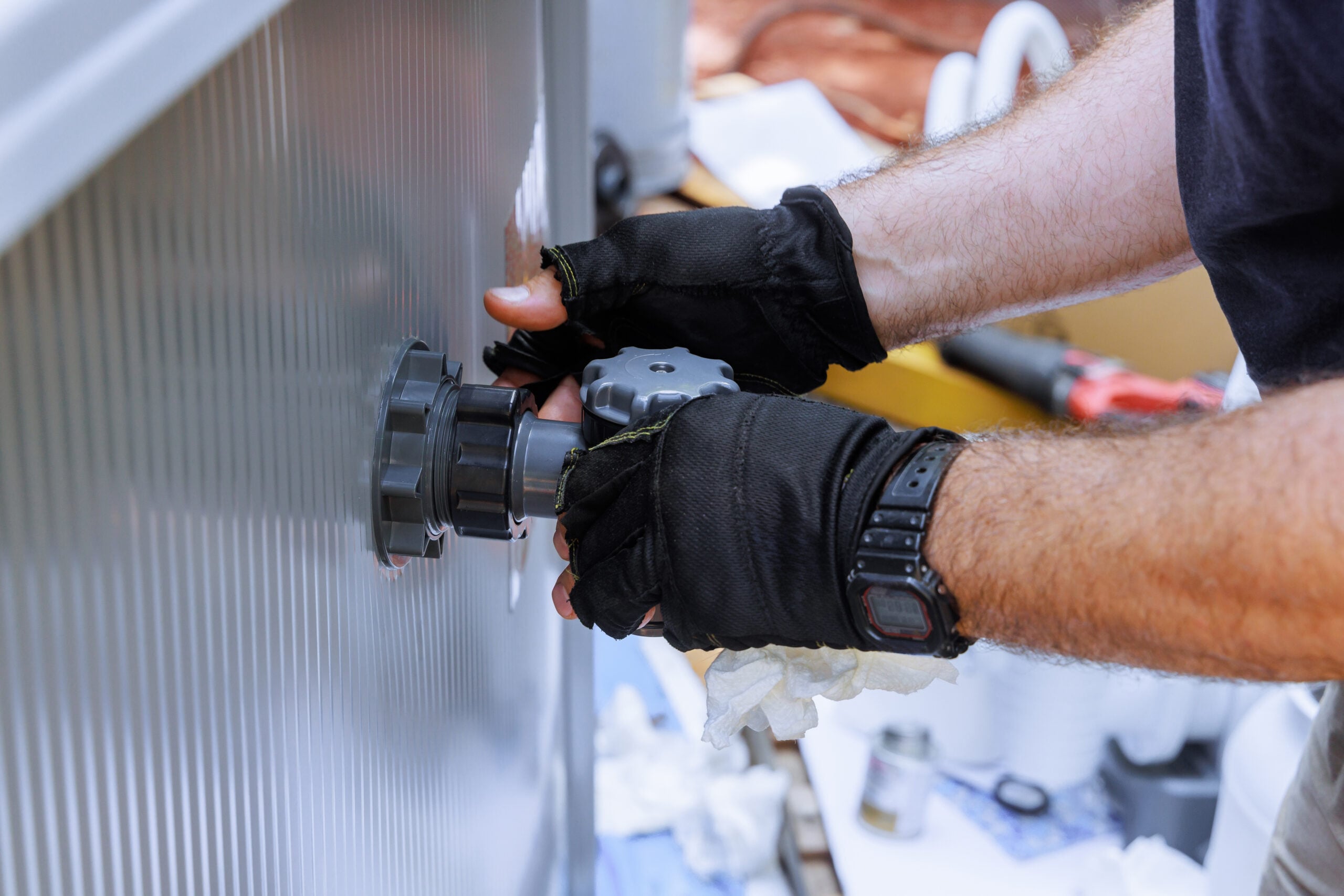
Tighten loose fittings with a hand wrench and replace worn O-rings or clamps. Small panel leaks can often be patched using a repair kit or silicone sealant rated for pool use. For older systems, replacing a single panel section may be more effective than repairing.
2. Low Water Flow Through the Panels
If the panels are not getting enough water, the pool may not heat evenly or at all. Low flow can result from blockages, air pockets, or closed valves.
What to check:
- Make sure your pool pump is running at normal pressure.
- Confirm that the diverter valve to the solar panels is open.
- Check for debris in the filter or skimmer basket.
- Inspect the panels for trapped air by listening for gurgling or uneven sound.
Simple fix:
Backwash or clean your filter to restore normal flow. If air is trapped in the system, open the end cap or bleed valve at the highest point of the panels until a steady stream of water comes out. This will restore circulation and pressure.
3. Uneven Pool Heating
Sometimes the water feels warmer in one area of the pool than another. This is usually a sign of uneven flow or partial blockage.
What to check:
- Confirm that all solar panels are receiving water equally.
- Make sure your plumbing lines are balanced and free of kinks or debris.
- Check for clogged headers or partially closed valves.
Simple fix:
Flush the panels by temporarily increasing the pump speed for a few minutes. This can dislodge air or debris that may be restricting flow. If the problem persists, inspect the manifold connections for buildup or scale and clean as needed.
4. Panels Not Heating the Water
If your panels seem to be working but the pool temperature is not increasing, there may be an issue with system timing or exposure.
What to check:
- Verify that the solar panels receive direct sunlight for at least six hours each day.
- Ensure that your system is set to run during the warmest part of the day.
- Inspect for shade from nearby trees or structures.
Simple fix:
Adjust the run time so the system operates between late morning and late afternoon when sunlight is strongest. Trim back any overhanging branches or relocate panels if shading has become a problem over time.
5. Noisy Operation or Air in the System
A humming or gurgling sound often means that air has entered the plumbing lines. This can happen after maintenance, heavy rain, or if water drains from the panels overnight.
What to check:
- Look for air bubbles in the return jets of the pool.
- Check for loose fittings or small suction leaks near the pump.
Simple fix:
Open the air relief valve or loosen the top union briefly to let trapped air escape. Once water flows steadily, reseal the connection and restart the system.
6. System Shuts Off Too Early or Runs Too Long
If you have an automatic controller, incorrect sensor placement or settings can affect performance.
What to check:
- Ensure the temperature sensors are clean and securely mounted near the solar panels and pool return line.
- Review your control settings to confirm the desired temperature range.
Simple fix:
Reset the controller or recalibrate the sensors according to the manufacturer’s guide. If the sensors are old or sun-damaged, replacing them is an inexpensive fix.
Preventive Maintenance Tips
- Inspect fittings and hoses every few months for signs of wear.
- Keep your pool’s filtration system clean to maintain strong flow.
- Check that your panels are free of leaves or debris that could block sunlight.
- Drain or cover the system during long periods of non-use if you live in a cooler region.
With a few regular checks, your solar pool heating system can last 15 to 20 years with consistent performance.
When to Replace Parts
If leaks become frequent, flow remains uneven, or your panels show cracking or fading, it may be time to replace certain components. Solar Pool Warehouse carries replacement panels, diverter valves, plumbing kits, and repair accessories designed for long-term durability and easy installation.
Keep Your System Running Strong
Solar pool heating is one of the simplest, most reliable ways to enjoy warm water and lower energy costs. A little maintenance goes a long way toward keeping your system efficient.
If you need parts, replacement fittings, or expert advice, Solar Pool Warehouse has everything you need to keep your system running smoothly year after year.